Math keyboard myths

Common Misconceptions About Math Keyboards

A math keyboard is often misunderstood. It does not have to be a virtual keyboard, a calculator, a complicated code system, or a replacement for your normal typing setup.

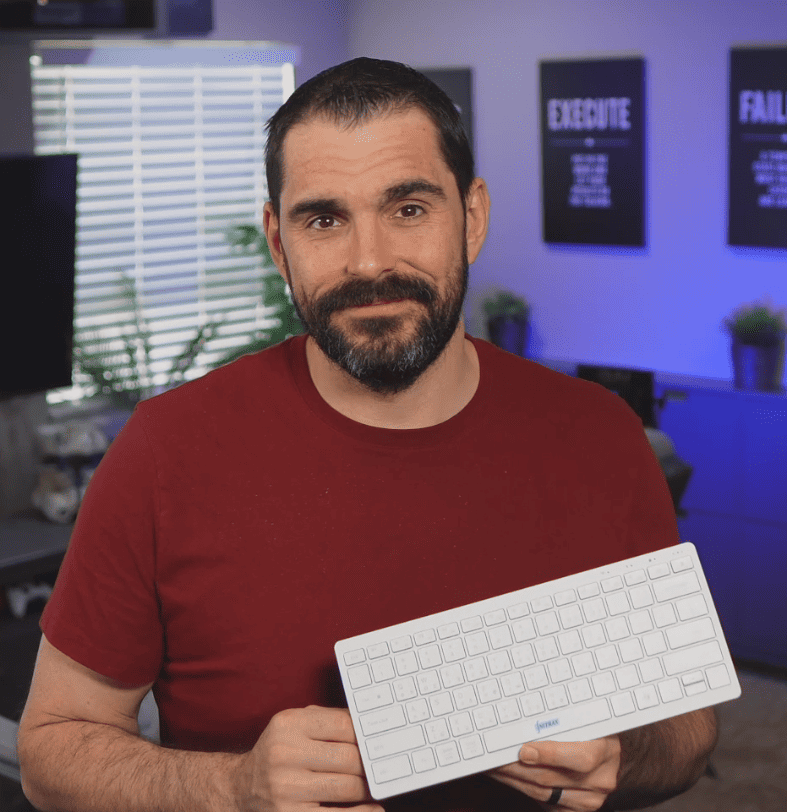
A physical math keyboard like Nitrax Mathematical Keyboard is simply a compact hardware keyboard with mathematical symbols, Greek letters, and scientific characters printed directly on the keys.

Positive Amazon reviews for the Nitrax Mathematical Keyboard
This page clears up the most common concerns before buying or comparing a keyboard for math symbols.

Quick myth check

Most misconceptions come from confusing a physical math keyboard with software keyboards, equation editors, programmable keyboards, or calculators. The real category is simpler: visible symbols on physical keys, used in everyday writing apps.

FALSE

“You need to memorize shortcuts.”

The point is the opposite. The symbols are printed on the keys, so you can use visible symbol layers and simple key combinations instead of memorizing symbol codes.

FALSE

“It only works in Word.”

A physical math keyboard is useful in everyday writing environments such as documents, slides, notes, emails, and other apps where typed symbols are accepted.

FALSE

“It replaces your normal keyboard.”

Nitrax Mathematical Keyboard is compact and focused on math input. It is meant to support normal typing workflows, not take over your entire desk setup.

FALSE

“It is only for mathematicians.”

Students, teachers, engineers, science users, and technical writers all run into math symbols. You do not need to be a professional mathematician to benefit from faster symbol input.

Misconception 1: you need to memorize hidden commands

This is one of the biggest fears around any keyboard for math symbols. People imagine a long list of codes, hidden mappings, or commands they have to learn before the keyboard becomes useful.

That is why printed symbols matter. A keyboard with math symbols printed on the keys makes the layout visible. You are not trying to remember a private code system; you are using a physical reference that sits under your fingers.

  • 1

    Visible symbolsThe symbols are on the keys, not hidden in a separate lookup table.

  • 2

    Simple key combinationsThe printed symbol layers reduce the need to memorize symbol codes.

  • 3

    Less searchingYou spend less time opening menus or copying symbols from somewhere else.

Misconception 2: it only works in Microsoft Word

Word is a common place to write math, but it is not the only place where math symbols matter. Students and teachers also write in Google Docs, slides, emails, notes, worksheets, learning platforms, and technical explanations.

A physical mathematical keyboard is useful because it focuses on symbol input, not on locking you into one equation editor. For users comparing input methods, the key question is whether the symbols fit your everyday writing workflow.

DocumentsSlidesNotesEmailsWorksheets

Misconception 3: it replaces your normal keyboard

People sometimes picture a math keyboard as a huge replacement keyboard or a calculator-like device. That is not the most practical model for everyday writing.

Nitrax Mathematical Keyboard is a compact physical keyboard for math input. It is meant to sit alongside your normal workflow and make the math layer easier to access when you need Greek letters, operators, arrows, roots, inequalities, and scientific symbols.

If you want a broader comparison, see math keyboard software vs physical keyboard.

Misconception 4: it is only for mathematicians

Math symbols appear in many fields. A high school student writing homework, a physics student taking notes, a teacher preparing slides, or an engineer writing a quick explanation may all need the same basic symbols.

The practical audience is not just mathematicians. It is anyone who writes equations or scientific notation often enough that copy/paste, symbol menus, and code lookup become annoying.

What a math keyboard actually is

A math keyboard is not a calculator and not a symbolic solver. It does not do the math for you. It helps you type the symbols you already know you need.

The clearest version is a physical keyboard with printed math symbols. That means the product solves an input problem: normal keyboards are built for letters, numbers, and punctuation, while mathematical writing often needs Greek letters, operators, arrows, set notation, comparison signs, and scientific symbols.

For a deeper explanation, read does a math keyboard exist? or best keyboard for equations.

Not a virtual keyboard

Nitrax Mathematical Keyboard is physical hardware with printed symbols on the keys.

Not a calculator

It helps you type mathematical notation. It does not replace thinking, solving, or checking your work.

Not only for experts

The strongest use cases are everyday math writing, student work, teaching materials, and technical notes.

Bottom line

The best reason to use a math keyboard is not that it makes you look technical. It is that ordinary keyboards make mathematical writing harder than it needs to be.

Nitrax Mathematical Keyboard gives common math symbols, Greek letters, and scientific notation a physical place on the keyboard, so writing math can feel closer to normal typing.

FAQ

Do you need to memorize shortcuts to use a math keyboard?
No. With Nitrax Mathematical Keyboard, the symbols are printed on the keys. The goal is to use visible symbol layers and simple key combinations, not memorize long lists of hidden codes.
Does a math keyboard only work in Word?
No. Word is a common use case, but a physical math keyboard can also help in documents, notes, slides, emails, and other writing apps that accept typed mathematical symbols.
Does a math keyboard replace a normal keyboard?
Not necessarily. Nitrax Mathematical Keyboard is compact and focused on math input. It supports normal writing workflows by making mathematical symbols easier to type.
Who is a math keyboard for?
It is mainly useful for STEM students, teachers, educators, engineers, and technical users who write math symbols often.